
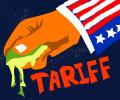
The 50 per cent US tariff on Indian goods pose a downside risk to growth but the impact is expected to be short-lived for the economy, and consumption demand could see an uptick after the new goods and service tax (GST) rates are implemented which could even offset the external uncertainty, Chief Economic Advisor (CEA) V Anantha Nageswaran reckoned on Friday.
'If the near-term economic pain is absorbed more by those who have the ability and the financial strength to do so, then small and medium enterprises in downstream industries will emerge stronger from the trade imbroglio.'

'...as then it brings them closer to the complaints and grievances that the public faces.'

'The state governments of Gujarat, Maharashtra and Tamil Nadu will be encouraged to consider measures of their own as the employment and economy in such export-oriented states will be affected.'
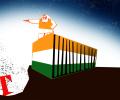
The US' move to raise the tariff on most Indian goods to 50 per cent could drag India's GDP growth for FY26 by 35 to 60 basis points, according to various economists. One basis point (bp) is equal to 0.01 per cent.
With inflation comfortably below the Reserve Bank of India's (RBI's) 4 per cent median target and likely to undershoot its 3.7 per cent projection for 2025-26 (FY26), there is room for the monetary policy easing cycle to be sustained, the Finance Ministry said on Monday. The comments, featured in the ministry's Monthly Economic Review for June 2025, assume significance ahead of the Monetary Policy Committee (MPC) meeting of the Reserve Bank of India (RBI) scheduled to begin from August 5.

India is seeking either an exemption or a longer timeline on the pharmaceutical tariffs, expected to kick in by July 31.

'It is not rigidity.' 'I am just sticking to what I believe very strongly in, particularly if you have been given an opportunity to serve the country....'

A recent World Bank report placing India among the most equal countries globally may present a limited view of inequality, with economists suggesting that broader data sets could tell a different story. According to the report, India's Gini index (or coefficient/ratio), a key measure of inequality, stood at 25.5 in 2022-23, placing the country fourth globally in terms of equality, behind only the Slovak Republic, Slovenia, and Belarus.
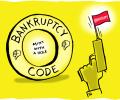
The recent notification by the Insolvency and Bankruptcy Board of India (IBBI) allowing part-resolution of stressed assets of companies under the insolvency process has sent many resolution professionals (RPs) and committees of creditors (CoCs) back to the drawing board to reassess their strategies for resolving corporate insolvencies.
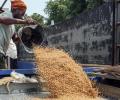
Very sensitive items -- such as apples, which carry political weight and are closely tied to farmer interests in states like Himachal Pradesh and Uttarakhand -- may face restricted concessions.

In a double-dose bid to boost growth and employment prospects, the Union Cabinet on Tuesday approved a Rs 2.07 trillion outlay for a research development and innovation (RDI) Scheme to fund private sector innovations, and an employment-linked incentive (ELI) to create over 35 million new jobs over the next two years.

India's macroeconomic health is in a "relative goldilocks situation", and although the risk of higher landed oil prices, due to insurance cost surges and closure of choke points due to the brief Israel-Iran war, has receded, it is "too soon to sound the 'all clear' for the rest of the year", the Finance Ministry said on Friday.
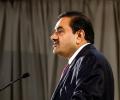
Five companies have submitted resolution plans for Jaiprakash Associates Ltd (JAL), the flagship company of the beleaguered Jaypee group, the company has said in a stock exchange filing. The Adani group, Vedanta, Jindal Steel & Power, Dalmia Bharat, and PSP Projects are the final bidders and the offers range from Rs 10,000 crore to Rs 11,000 crore, said a source close to the development.
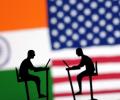

India has decided to submit a dossier at the upcoming Financial Action Task Force (FATF) meeting, calling for Pakistan to be placed back on the grey list of the global money laundering and terrorist financing watchdog.
The revised ceiling will be within the Rs 10 lakh mark.

Re-entry into the list could have far-reaching consequences for Pakistan, including diminished foreign investment, increased borrowing costs, and tighter scrutiny from global financial institutions.
As much as 60 per cent of all resolution plans under Insolvency and Bankruptcy Code (IBC) were approved in the last three years alone, with over 30,000 cases having an underlying default of Rs 13.8 trillion getting settled even before admission, according to data till December 2024 released by the Insolvency and Bankruptcy Board of India (IBBI).
'We believe that in the new world order FTAs or bilateral trade agreements (BTAs) are the way forward.' 'They are enablers for our participation in global value chains. Today, around 70 per cent of global trade is tied to these chains.'
 © 2026 Rediff.com - Advertise with us - Disclaimer - Privacy Policy - Sitemap - Feedback - About us - Terms of use - Grievances